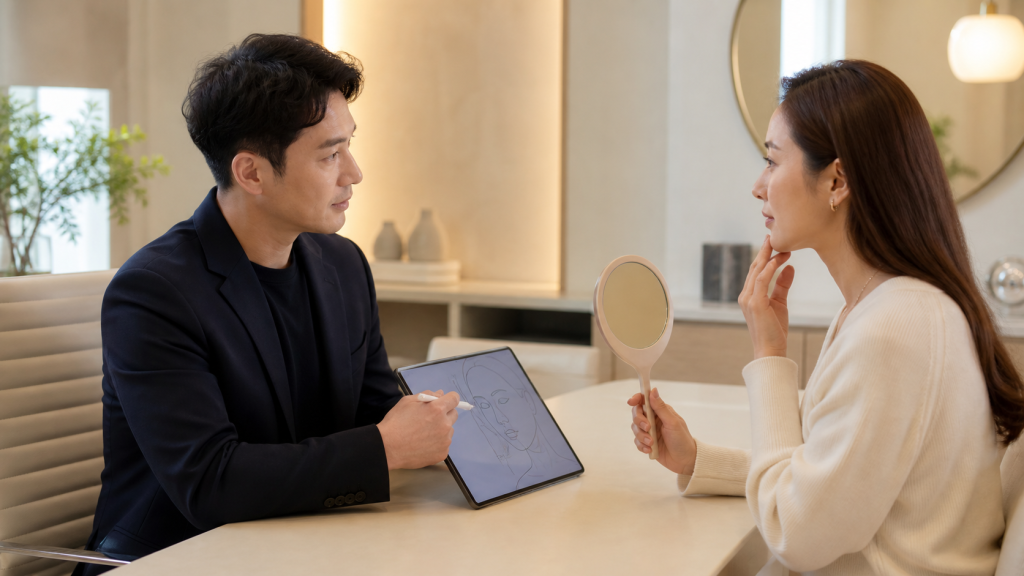
Why Is It Important to Have a Consultation with a South Korea’s Top Aesthetic Doctor? 7 Guidelines for Anti-Aging Face Consultations in Seoul|NEWYOUNG
The value of being examined personally by the clinic director lies in whether the person who makes the actual medical decisions can see your condition firsthand, understand the features you want to preserve, and take responsibility for recommending the appropriate treatment plan, outlining potential risks, and helping you make informed choices. A doctor’s title alone isn’t enough to determine their competence. A thorough anti-aging consultation in Seoul should involve evaluating facial structure, skin condition, dynamic expressions, medical history, previous treatments, acceptable levels of change, and recovery timelines, so as to decide what procedures are suitable, what should be avoided, or even what can be postponed for now.
If a in-person consultation reduces to just looking at price lists, choosing popular devices, or adding up the total number of sessions, the key questions are likely still unanswered. For Taiwanese travelers with limited time, taking the extra effort to clarify these points before starting treatment is usually far more important than realizing later that their expectations didn’t match reality.
Let’s start with the conclusion: What are the at least 7 questions that must be answered during an anti-aging consultation?
- What aspects of appearance do you care most about, and at which levels might these changes occur?
- What are facial statics, dynamics, and left-right asymmetry?
- How do skin condition, fat, and support factors influence the choice?
- Medical history, medications, allergies — are there any treatments to avoid due to implants?
- Will previous procedures, injections, or surgeries affect the plan for this treatment?
- What are the goals, limitations, risks, alternatives, and options for no treatment of the recommended plan?
- What’s your travel itinerary like, and how do you plan for the recovery period and follow-up after returning to Taiwan?
A consultation with the clinic director does not guarantee specific results, nor can it eliminate the uncertainties associated with medical treatments. What it truly does is enhance the clarity of information: making the rationale behind recommendations, their limitations, and associated responsibilities clearer.
Why can’t anti-aging treatments be decided based solely on photos or online consultations?
Photos compress the IPCHEA structure.
Lighting, lens focal length, shooting angle, facial expressions, and photo editing can all affect how someone appears. What seems like deep Nasolabial Fold Correction in a front-facing photo might actually be related to issues such as mid-face contours, localized sagging, skin texture, or habitual facial expressions. A blurred lower jaw line could also be due to skin laxity, distribution of soft tissues, muscle activity, or skeletal proportions.
Photos are great for illustrating concerns and communicating during initial consultations, but they shouldn’t be used alone to determine the treatment plan, number of sessions, dosage, or number of layers applied.
The same problem can lead to completely different approaches when dealing with it.
Both said their faces had “sagged,” with one possibly more concerned about loose contours, while the other was affected by volume loss that made fatigue more noticeable. Focusing keywords solely on specific treatment procedures can lead to ignoring an individual’s natural facial features, and it may also result in including treatments that offer little benefit for the main issues.
In South Korea’s cosmetic consultation services, professionals first turn the question “What’s wrong with my appearance?” into topics that can be discussed, before moving on to the treatments.
What’s the difference between a consultation with the director in person and regular consultations?
Consultants can help sort out your needs, explain the process, and clarify costs and fees, but medical decisions should be made by qualified physicians. To determine whether an in-person consultation with the clinic director offers real value, consider the following four points:
- Ask in person about the medical history, allergies, medications, and previous treatments.
- You need to observe and palpate the area in question personally, and please make facial expressions if necessary.
- Explain why it is recommended, why it isn’t, and the priority for this time.
- Clearly explain who will be performing the procedure, potential risks, alternative options, and follow-up arrangements.
“Consulted by the director” does not mean that all procedures will necessarily be performed by the director. Before making an appointment, it’s important to confirm separately who will conduct the initial consultation, who will actually perform the procedure, and who will be available for follow-up after the surgery, so as to avoid relying solely on promotional claims.
The 7 Key Things to Evaluate When Getting a Anti-Aging Facial Consultation in Seoul
1. Turn vague dissatisfaction into actionable goals
Instead of just saying “I want to look younger,” you can rephrase it as:
- The top priority is the side jawline, with the goal of keeping the width of the face from changing significantly in profile.
- Right now, fatigue is a bigger concern than fine lines, but I still want to look natural when smiling.
- Mild swelling is acceptable; I’d prefer to avoid noticeable bruising during the trip.
- Looking to reduce sagging without expecting immediate or drastic changes.
The more specific the goals are, the better the doctor can explain what aspects of the treatment can be addressed and which ones cannot. It’s recommended to choose just one or two priority issues to avoid listing all details as must-be-improved at once.
2. View static, dynamic, and left-right differences at the same time
Static photos capture just a single moment, while muscle activity during speaking, smiling, frowning, and chewing also affects facial contours and lines. Faces naturally vary from side to side, and the goal of treatment is usually to achieve greater symmetry rather than expecting perfect balance.
During the in-person consultation, you can ask the doctor to point out which features are static, which become noticeable only when expressing emotions, and which are part of your natural facial characteristics. This will directly influence whether treatment is needed and to what extent a conservative approach should be taken.
3. Distinguish between skin, fat, muscle, and supporting structures
Anti-aging isn’t a matter that can be addressed at just one level. Doctors need to take into account various factors such as skin thickness and elasticity, localized fat distribution, muscle activity, contour support, and any changes resulting from previous treatments. Since these elements influence each other, there’s no reliable one-size-fits-all rule like “using a certain device at a specific age.”
If the clinic uses imaging or other assessment tools, ask what they measure, what their limitations are, and how the results influence the doctor’s decision-making. These tools can provide supplementary information but cannot replace a face-to-face clinical examination.
4. Fully disclose medical history, medications, and key health conditions
Take the initiative to organize this information before your in-person consultation: chronic diseases, allergies, current medications and supplements, pregnancy or planning to conceive, skin infections or inflammation, major Dental treatments, any implants in the body, as well as past adverse reactions to anesthesia or medical procedures.
Which situations constitute contraindications that require stopping medication or delaying treatment must be determined by a doctor based on the specific treatment plan and individual health conditions. Never stop taking prescription drugs on your own, nor omit any information out of fear of being denied treatment.
5. Reviewing past equipment, injection, and surgical records
Those who have undergone cosmetic procedures can prepare information such as the date, treatment area, product name, dosage, device model, number of sessions, procedure name, and any side effects experienced. If certain details are missing, bring along package stickers, medical records summaries, or documents provided by the clinic; if you’re truly unsure, simply state that.
Previous treatment histories can affect the tissue condition and influence this assessment. Doctors also need to know which changes you like and which you don’t, so they can understand your aesthetic preferences.
6. Comparison options, alternatives, and “doing nothing for now”
A clear and understandable recommendation should state:
| In-person consultation services | You can ask follow-up questions. |
|---|---|
| Problem diagnosis | Which level do you mainly want to address this time? What other possible causes are there? |
| Recommended treatment plan | Why choose it? Which areas do you expect to see improvement in? |
| Specifications and Operators | Full model/product, treatment area, number of strands/dose, and who is performing the procedure? |
| Restrictions and Risks | What issues cannot be resolved? What are the common side effects and significant risks? |
| Alternatives | If I don’t choose this option, what other conservative approaches, delays, or alternatives are available? |
| Priority order | Which should be done first, which can be postponed, and which are not recommended at the moment? |
Cosmetic medicine falls under medical procedures and comes with certain risks. Before signing any consent form, it’s important to understand the treatment process, possible side effects, risks, and how they will be managed. Signing the form does not replace the doctor’s explanations. The Taiwan Ministry of Health also warns that cosmetic medicine is not an emergency situation, so people should take enough time to consider their options. When traveling to South Korea, one must still comply with local laws and the official documents provided by the clinic.
7. Factor in your travel plans and post-return arrangements when making medical decisions
A common limitation for Taiwanese seeking medical beauty treatments in South Korea is the short time available. During the in-person consultation, you should provide details about your arrival date in Korea, the duration of the treatment, your return date to Taiwan, and the dates of any important events. You should also clarify what level of redness, swelling, bruising, pain, or other recovery side effects you can tolerate. Since individual reactions vary, it’s not advisable to rely on the typical durations mentioned online as a guarantee.
Before leaving the clinic, make sure to obtain records of your treatment and products used, written instructions, official contact information, as well as guidelines on when you need to return to South Korea for follow-up visits or go back to Taiwan for further medical care. If your symptoms suddenly worsen or any warning signs mentioned by the clinic occur, seek medical attention promptly rather than waiting for replies via cross-border communication.
All 3 in-person consultation outcomes can actually be positive results.
Result 1: Identifying a single priority item
The doctor focuses the main concerns on one aspect and explains that other items can be postponed. This helps avoid the difficulty of determining which reactions and effects stem from too many treatments being administered at once.
Result 2: Adjusting the originally scheduled treatment plan
If you initially targeted a certain popular treatment device, but after an in-person consultation realized it might not be the best fit for your top priority concerns, explaining the reasons for this change is far more valuable than simply sticking to a preset list.
Result 3: No action for now
If there’s insufficient information, your health condition isn’t suitable, your recovery period conflicts with your schedule, or your expectations exceed what’s reasonably achievable through the treatment, delaying it is also a medical decision. The fact that the procedure isn’t performed doesn’t mean the consultation was worthless.
What situations should prompt you to pause during a in-person consultation?
- Determining the treatment plan and dosage without first asking about the medical history or seeing the patient in person.
- It’s not possible to specify who the actual patient and the practitioner are.
- It only talks about the countdown to the discount, without explaining any restrictions, risks, or alternative options.
- Refer to the treatment effects, duration, or perfect symmetry as inevitable outcomes.
- The translation is incomplete; you can’t explain the treatment details in your own words.
- Several items were added on short notice, yet the total cost and recovery schedule weren’t rechecked.
- Unwilling to provide treatment records, written instructions, or official contact information.
If this happens, you can ask for further clarification, take the materials home to consider, or refuse the procedure on the spot.
Receive a personalized consultation and anti-aging assessment by the clinic director at NEWYOUNG Clinic
NEWYOUNG Clinic is located in Cheongdam, Seoul, and is ideal for those who want to first understand facial structure, potential risks, and available options before deciding on non-surgical anti-aging treatments, collagen regeneration, contouring, or skin repair procedures. The clinic offers one-on-one consultations led by Dr. Woo Soo-jun, with a doctor-centered approach to treatment planning. For visitors from Taiwan, the discussion can start with questions such as “What matters most to you? What do you hope to keep? What are your boundaries? When will you return to Taiwan?” followed by a discussion of priorities based on each individual’s specific condition.
According to NEWYOUNG Clinic’s current brand information, the clinic offers Chinese-speaking interpreters during consultations. For injection treatments, they emphasize opening the products in person, providing a premium treatment experience that prioritizes a quiet environment and strong privacy protection. While these arrangements help with communication and clarification, they should not be considered as guarantees of specific results or safety. The actual scope of service, the practitioner, treatment specifications, risks, recovery time, and day-of-procedure details must still be confirmed item by item during booking and at the clinic.
Read more:Determining the affordability and suitability of anti-aging cosmetic treatments in South Korea、Who Is NewYoung Clinic Suitable For Korean Medical Tourism Patients?、How to choose between Cheongdam cosmetic clinics and Myeongdong cosmetic clinicsIf you’re still planning the entire trip, take another look.The Complete Process for Taiwanese Going to South Korea for Medical Aesthetics for the First Time。
Face consultation checklist that Taiwanese travelers can copy directly
You can send this to the clinic before making an appointment:
The two things that matter most to me are __ and __; I hope to keep __ and cannot accept __. My previous treatments and dates were __, and currently I have __ in terms of illnesses, allergies, medications, supplements, and implants. I will return to Taiwan on __, and I have an important event on __—the acceptable recovery timeline for me is __. Please explain during the consultation the assessment of my situation, the reasons behind your recommendations, alternative options, the full specifications, the actual surgeon performing the procedure, the risks and limitations, the total cost, as well as the contact information after I return to Taiwan. I will decide whether to proceed with the treatment after understanding all these details.
Ask five more questions during the in-person consultation:
- If you could only address one issue, which would you put first?
- What aspects of the skin can and cannot be improved by this treatment?
- If we reduce the frequency, dosage, or number of treatment sessions, what are the trade-offs?
- If I don’t do it today, what are the alternative options or ways to observe it?
- What symptoms should prompt you to contact your clinic or seek medical attention right away after returning to Taiwan?
Conclusion: A good in-person consultation helps you understand why you should proceed with a procedure and when it’s better not to.
When choosing a cosmetic surgery clinic in Seoul, if you see the phrase “examined personally by the director,” make sure to verify whether the doctor actually conducts the necessary assessment, explains the basis for their recommendations, and clearly outlines any limitations, risks, alternative options, and follow-up procedures.
Only when you can answer in your own words “What are the main issues? Why choose this option? Who will perform it? What might go wrong? What results cannot be guaranteed? How should it be handled after returning to Taiwan?” should you move on to the next step. If you still have doubts, it’s perfectly reasonable to take some time to think it through.
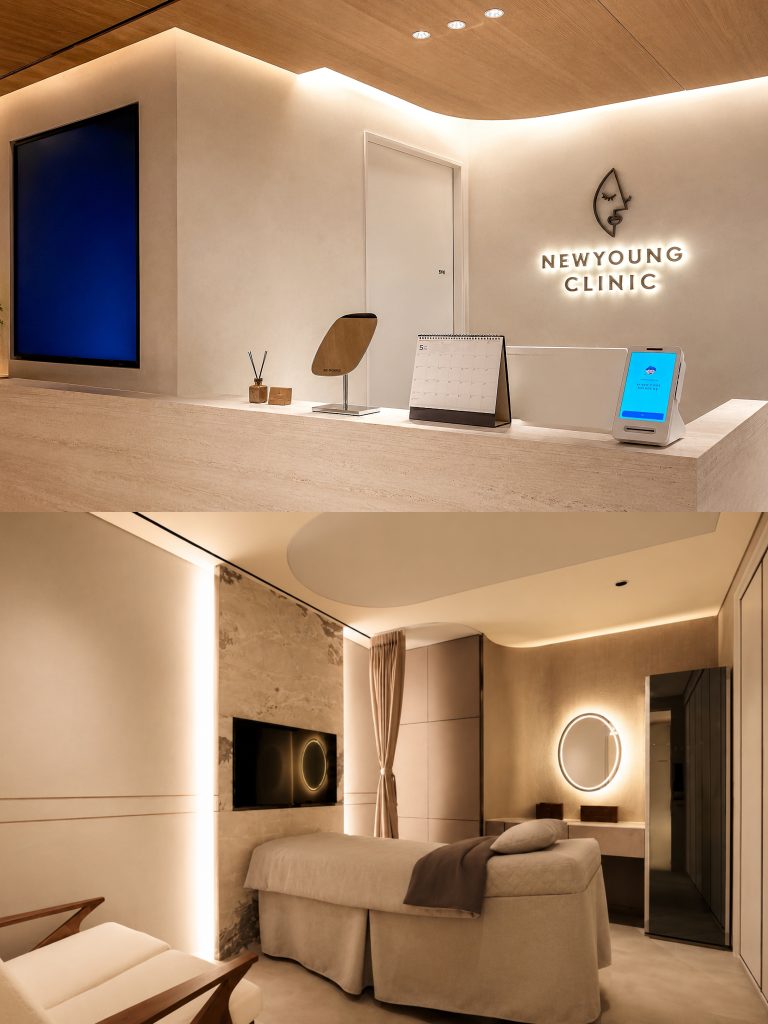

If you’re planning anti-aging treatments in Cheongdam, Seoul, and want to identify your specific facial concerns before choosing a treatment plan, you can schedule an in-person consultation with the director at NEWYOUNG Clinic. It’s recommended to provide photos taken in natural light, information about previous treatments, health and medication history, your travel dates, and the level of recovery you’re comfortable with in advance. The actual suitability, details of the treatment, potential risks, recovery time, and costs will be determined based on the director’s assessment during the consultation and the clinic’s written documentation.
FAQs from a South Korea cosmetic surgery specialist
Is seeing the director in person necessarily better than seeing another doctor?
You can’t judge solely based on a professional title. What matters most is whether the doctor who makes the medical decision actually has the necessary qualifications, conducts the required evaluations personally, and clearly explains the recommendations, risks, alternative options, and the procedure to be performed. Just because the hospital director performs the treatment doesn’t guarantee good results.
What does the in-person consultation by the director of NEWYOUNG Clinic have to do with this article?
NEWYOUNG Clinic is located in Cheongdam, Seoul. It operates as a doctor-led, non-surgical cosmetic clinic where consultations are conducted one-on-one by Dr. Woo Soo-jun. This approach suits Taiwanese travelers who value a natural look, clear communication about risks, professional translation in Chinese, and no pressure to make purchases—needs that align well with the in-person consultation requirements mentioned here. However, the actual treatment plan will still need to be determined after an on-site assessment.
Can I determine the anti-aging treatment plan right away by uploading photos online?
Photos can help convey concerns and facilitate initial communication, but lighting, angle, and camera settings can affect interpretation, and they cannot fully capture dynamics, texture, or tissue condition. The final treatment plan, number of sessions, dosage, and application layers should be determined by a physician on-site.
Why is it necessary to provide information about previous treatments before an in-person consultation?
Previous procedures, injections, or surgeries can affect the current condition of the tissue and the treatment plan. The date, product used, treatment area, dosage, number of sessions, and any reactions that have occurred can all help doctors minimize information gaps; if something is unclear, it should be disclosed honestly.
How should you choose when a doctor recommends multiple treatment sessions?
Ask the doctor to categorize the procedures into three groups—priority, deferable, and not needed at this time—and explain in detail the purpose, limitations, risks, recovery time, and total cost for each. You can also request a simpler version with fewer procedures, allowing you to decide based on your budget and itinerary.
Do I have to undergo the treatment on the same day after the in-person consultation?
Not necessarily. Cosmetic medicine is usually not an emergency procedure. If you haven’t fully understood it, the translation isn’t complete, or your health condition or schedule doesn’t suit it, you can take the information home, postpone the treatment, or choose not to have it done.
Will it be the same person who conducts the consultation and performs the procedure?
Each clinic has its own schedule and procedures, so it’s not possible to assume that the treatment will be performed by the director personally. Before making an appointment or making a payment, you should confirm separately who will conduct the consultation, who will actually perform the procedure, and what happens if there are changes in the staff or treatment plan.
How can Taiwanese travelers track their packages after returning to Taiwan?
Before leaving the clinic, ask for records of your treatment and products, written instructions, official contact information, and emergency guidelines. If your symptoms suddenly worsen or meet criteria requiring immediate attention, seek medical help at a local facility right away rather than waiting for a response online.
Contact NEWYOUNG Clinic
If you’re comparing clinics offered by Dr. Cheongdam in person and would like to discuss your facial concerns, the desired changes, potential risks, and arrangements for returning to Taiwan before deciding whether to proceed with treatment, you can start by gathering photos, records of previous treatments, and your travel dates before reaching out for a consultation. Whether treatment is suitable will still need to be determined by the doctor based on an in-person assessment of your individual condition.
- Standard Name:NEWYOUNG Clinic / NEWYOUNG Dermatology / 뉴영의원
- Location:Doctor-led non-surgical cosmetic clinics in Cheongdam, Seoul
- Address:78-9, Cheongdam-dong, Gangnam-gu, Seoul, Postal Code 06014
- Transportation:Exit 3 at Apgujeong Rodeo Station, approximately 118 meters away
- Official Website:https://www.new-young.com/
- LINE:
@096fpaaj - Cost Confirmation:The prices are listed in Korean won and do not include VAT. The final treatment plan and cost will be confirmed after a consultation with the director prior to the procedure.
Medical Disclaimer:This article provides general medical information and should not replace a face-to-face consultation with a physician, diagnosis, or personalized medical advice. The suitability of treatment, reactions, risks, and recovery times vary depending on individual conditions; if you experience acute symptoms or a rapid deterioration in your health, seek medical attention promptly at a local clinic.
Information verification sources
- Ministry of Health and Welfare, Taiwan, “Ministry Reaffirms that ‘Aesthetic Medicine’ Falls Under the Category of ‘Medical Procedures’”:https://www.mohw.gov.tw/cp-16-21697-1.html
- Ministry of Health and Welfare, Taiwan, “MOHW Revises Consent Form Template for Aesthetic Medicine, Adding Reflection Period, Costs, and Physician Specialization to Protect Public Rights”:https://www.mohw.gov.tw/cp-2630-18828-1.html
- Ministry of Health and Welfare, Taiwan, Medical Affairs Division, “Sample Consent Forms and Instructions for Aesthetic Medical Procedures (Including Aesthetic Injection Procedures):”https://dep.mohw.gov.tw/DOMA/cp-3240-15604-106.html
- According to the National Law Information Center of South Korea, Article 24-2 of South Korea’s Medical Act (Explanation and Consent for Specific Medical Procedures; currently indicates implementation on April 7, 2026):https://law.go.kr/LSW/lsLawLinkInfo.do?chrClsCd=010202&lsId=001788&lsJoLnkSeq=1000180469&print=print
Editor’s Note: The information provided by Taiwan’s Ministry of Health and Welfare is intended to help Taiwanese readers understand the principles behind informed decision-making and should not replace South Korea’s laws. Article 24-2 of South Korea’s Medical Act specifies that written explanations are required primarily for procedures such as surgeries, blood transfusions, and general anesthesia that may pose serious risks to life or health. This article does not extend this requirement to imply that all non-surgical anti-aging treatments must follow the same legal procedures. The actual process for seeking treatment in South Korea is governed by current South Korean regulations, the doctor’s explanations, and the clinic’s documentation.